
Cities in Parallel
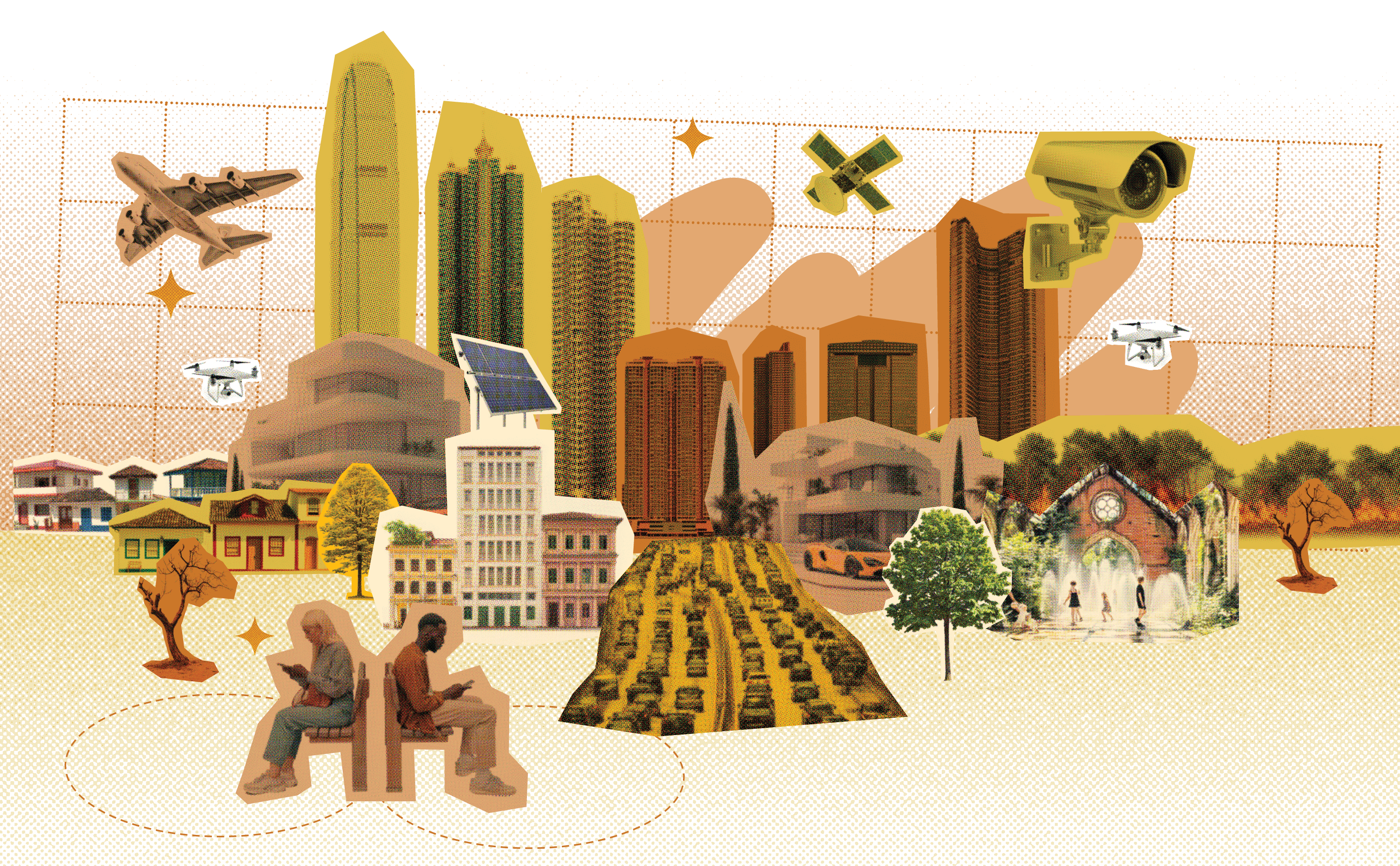
The Baseline scenario, in which the cities closely follow our own timeline, and systems |largely continue along today’s path with only minor changes.
Many cities in this future look more like today, just a few decades down the line. Here we see cities that are making do and mending without major structural changes. These cities patch, adapt, and improvise their way through crisis after crisis. After all, when your dominant mode is reaction, rather than reinvention, you’re always trying to dam up the latest levee that broke.
People are largely insular, connecting online - although the AI networks, rolled out across all corners of life with minimal public oversight, are hardly a smooth experience. When the systems crash, traffic grinds to a halt, school’s out without the e-learning hub, and people are left wondering whether the air is safe to breathe today or if the weather app is just glitching again. All this on top of creaking infrastructure which aged faster than it was replaced, and climate impacts that hit hard and unevenly. But the Cities in Parallel people adapted, with pockets of community forming around pop-up gardens in vacant lots, or through local barter networks. The future came, but it looked familiar, with slightly sharper edges.